


7 Benefits of Using Queue Management Software in Hospitals and Banks
In today’s fast-paced world, customer expectations are higher than ever—especially in critical service environments like hospitals and banks. Long waiting times, unclear service processes, and overcrowded waiting areas can quickly lead to frustration, reduced trust, and poor overall experience. This is where Queue Management Software (QMS) plays a vital role.
Queue management systems are no longer a luxury; they are a necessity for organizations that aim to deliver efficient, organized, and customer-centric services. By automating and optimizing the flow of customers, these systems help institutions operate more smoothly while significantly improving satisfaction levels.
Below are seven key benefits of using queue management software in hospitals and banks, and why investing in such a system is a smart strategic decision.

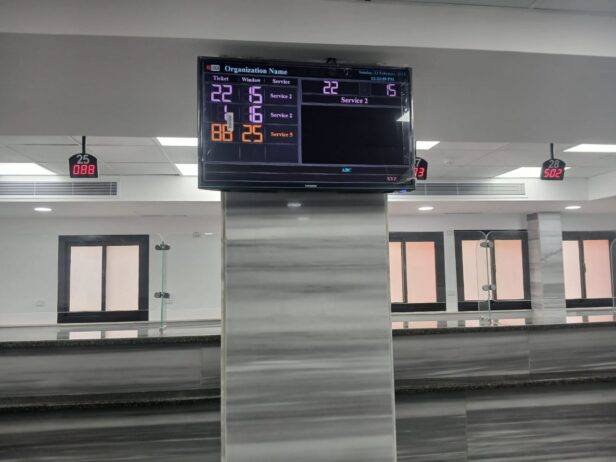
- 1X Client Display 3 Digits with Power Adapter
- 1X Calling Unit
- Alert by Ding-Dong.
- Calling customers in sequential number.
1. Reduced Waiting Time and Improved Flow
One of the most immediate and visible benefits of queue management software is the reduction of perceived and actual waiting time.
In traditional waiting systems, customers often stand in long physical lines without knowing how long they will wait. This uncertainty increases stress and dissatisfaction. Queue management software solves this by organizing customers into a virtual queue, assigning turn numbers, and providing real-time updates.
In hospitals, patients are directed efficiently based on service type (registration, consultation, lab tests, billing), reducing congestion and confusion.
In banks, customers are routed to the appropriate counter (teller, customer service, loans, or priority services), ensuring smoother traffic flow.
As a result:
- Service times become more predictable
- Bottlenecks are minimized
- Staff can serve customers more efficiently
Reduced waiting time directly translates into a better customer experience and higher operational efficiency.
2. Enhanced Customer Experience and Satisfaction
Customer experience is a critical success factor for both hospitals and banks. Long queues and disorganized service negatively impact how people perceive an institution.
Queue management software improves the experience by:
- Allowing customers to wait comfortably instead of standing in line
- Displaying clear instructions and turn notifications on screens
- Offering transparency about queue status and estimated waiting time
In hospitals, this is especially important for patients who may already be anxious or unwell. A calm, organized waiting process reduces stress and creates a more compassionate environment.
In banks, customers feel respected when their time is valued. An efficient queue system enhances trust and loyalty, encouraging repeat visits and positive word-of-mouth.
Satisfied customers are more likely to:
- Return to the institution
- Recommend it to others
- Engage positively with staff
3. Increased Staff Productivity and Performance
Queue management software doesn’t just benefit customers—it also significantly improves staff productivity.
Without a proper system, employees often deal with:
- Repeated customer complaints
- Confusion about service order
- Manual crowd control
A digital queue system automates customer flow, allowing staff to focus entirely on service delivery rather than queue management.
Benefits for staff include:
- Clear visibility of upcoming customers
- Balanced workload distribution
- Reduced stress and burnout
In hospitals, doctors, nurses, and administrative staff can work more efficiently without interruptions. In banks, tellers and customer service agents can manage transactions smoothly with fewer distractions.
This leads to:
- Faster service times
- Higher employee morale
- Better overall performance
4. Better Resource Allocation and Operational Efficiency
Queue management software provides real-time insights into customer flow, peak hours, and service demand. These insights enable managers to make data-driven decisions.
For example:
- Identifying peak visiting hours in hospitals
- Understanding which banking services are most in demand
- Allocating staff based on real usage patterns
With accurate data, institutions can:
- Adjust staffing levels dynamically
- Reduce idle time
- Prevent service overload
This optimized allocation of resources leads to lower operational costs and improved efficiency without compromising service quality.
5. Improved Organization and Service Prioritization
Both hospitals and banks deal with customers who require different levels of urgency and service priority.
Queue management software supports:
- Priority queues (elderly, disabled, VIP, emergency cases)
- Service-based routing
- Appointment integration
In hospitals, critical patients can be prioritized without causing disorder, ensuring timely medical attention.
In banks, VIP or corporate clients can receive fast-track services while maintaining fairness for other customers.
This structured approach:
- Eliminates chaos
- Ensures fairness and transparency
- Enhances service accuracy
Customers clearly understand the process, which reduces complaints and misunderstandings.
6. Valuable Analytics and Performance Reporting for Software for hospitals
One of the most powerful advantages of queue management software is its ability to generate detailed reports and analytics.
These reports can include:
- Average waiting time
- Service duration per counter
- Customer volume by time and service type
- Staff performance metrics
For hospitals, these insights help improve patient flow, reduce overcrowding, and enhance care delivery.
For banks, analytics support strategic planning, service optimization, and branch performance evaluation.
Data-driven insights enable management to:
- Identify inefficiencies
- Improve service quality
- Plan future expansions or upgrades
Over time, this leads to continuous improvement and measurable ROI.
7. Stronger Brand Image and Competitive Advantage
A well-organized, modern service environment leaves a strong impression on customers.
Implementing queue management software signals that an institution:
- Values customer time
- Invests in technology
- Prioritizes quality and efficiency
In highly competitive sectors like healthcare and banking, this can be a major differentiator.
Hospitals with efficient systems are perceived as more professional and patient-centric. Banks with smart queue systems appear more reliable, modern, and customer-focused.
A strong brand image results in:
- Higher customer retention
- Positive reviews and referrals
- Increased trust and credibility
Conclusion
Queue management software is a powerful solution that transforms how hospitals and banks operate. By reducing waiting times, enhancing customer experience, improving staff productivity, and providing valuable data insights, it delivers benefits that extend far beyond simple queue organization.
In an era where efficiency, transparency, and customer satisfaction are essential, investing in a smart queue management system is no longer optional—it is a strategic necessity.
Hospitals and banks that adopt this technology position themselves for long-term success, improved service quality, and a stronger competitive edge in an increasingly digital world

